
Clayton County Arrest Warrants Explained
An arrest warrant gives officers the power to arrest a named person. In Clayton County, that paper comes from Clayton Magistrate Court, and only after a judge sees sworn facts and finds probable cause. Probable cause is a fair basis to think a crime happened and that this person did it. Police can request a warrant. A private person cannot, though Clayton County offers a separate citizen application process instead. Once the judge signs, an officer serves the order and the sheriff may book the subject into jail. From there the case lands in a particular court: Superior Court for felonies, State Court for misdemeanors. The originating court keeps control of the live case. So knowing which Clayton County court issued the warrant tells you where to call. It also explains why one search screen is never enough. A jail lookup shows only detention, not the sworn application or the full warrant history. A case inquiry may show a public file while an unserved or sealed order stays hidden, so confirm the subject with a date of birth and a case reference whenever you can.
Clayton Magistrate Criminal Intake
Start warrant questions at the right desk. The Magistrate Court criminal division handles intake for many Clayton County arrest warrant matters, issuing arrest and search warrants, setting bonds on most criminal charges, and holding preliminary hearings. For public questions, call the clerk at 770-477-3443; court and chambers use 770-477-3444. Law enforcement gets around-the-clock access, but the public filing window keeps its own hours. Call before you drive over. The sheriff answers custody and booking questions, while the court answers questions about hearings, charges, and case status. The H.R. Banke Justice Center puts several offices under one roof, yet their records stay separate. The Magistrate clerk will not have a felony file held by the Superior Court clerk, or a misdemeanor file held by the State Court clerk. When you ask, give staff the alleged charge, the report number, and the court you know about, so the inquiry reaches the right desk in Clayton County. If no public record can be released, ask which office controls it and when to check again.
Inside a Clayton County Arrest Warrant
Clayton County publishes a two-page arrest-warrant form. It is blank, not a sample case. The fields show what the sworn complaint must contain and what the judge certifies when finding probable cause.
| Applicant and subject | Names and descriptors used to identify the parties. |
|---|---|
| Incident facts | Offense narrative, location, date, report number, officer, and agency. |
| Witnesses | Two witness fields support the complaint. |
| Judge action | Probable-cause certification and issuing magistrate. |
| Next setting | A preliminary-hearing date when assigned. |
| Case reference | The court-assigned number used for later status checks. |
Clayton County Warrant Forms
Clayton County posts an official forms list covering arrest-warrant, child-abandonment, and felony bad-check matters. The list helps an applicant pick the right process, and each path carries its own prerequisites. A blank form proves nothing about whether a warrant actually exists. The county's public court forms page shows the current list, with no filled private record on it.
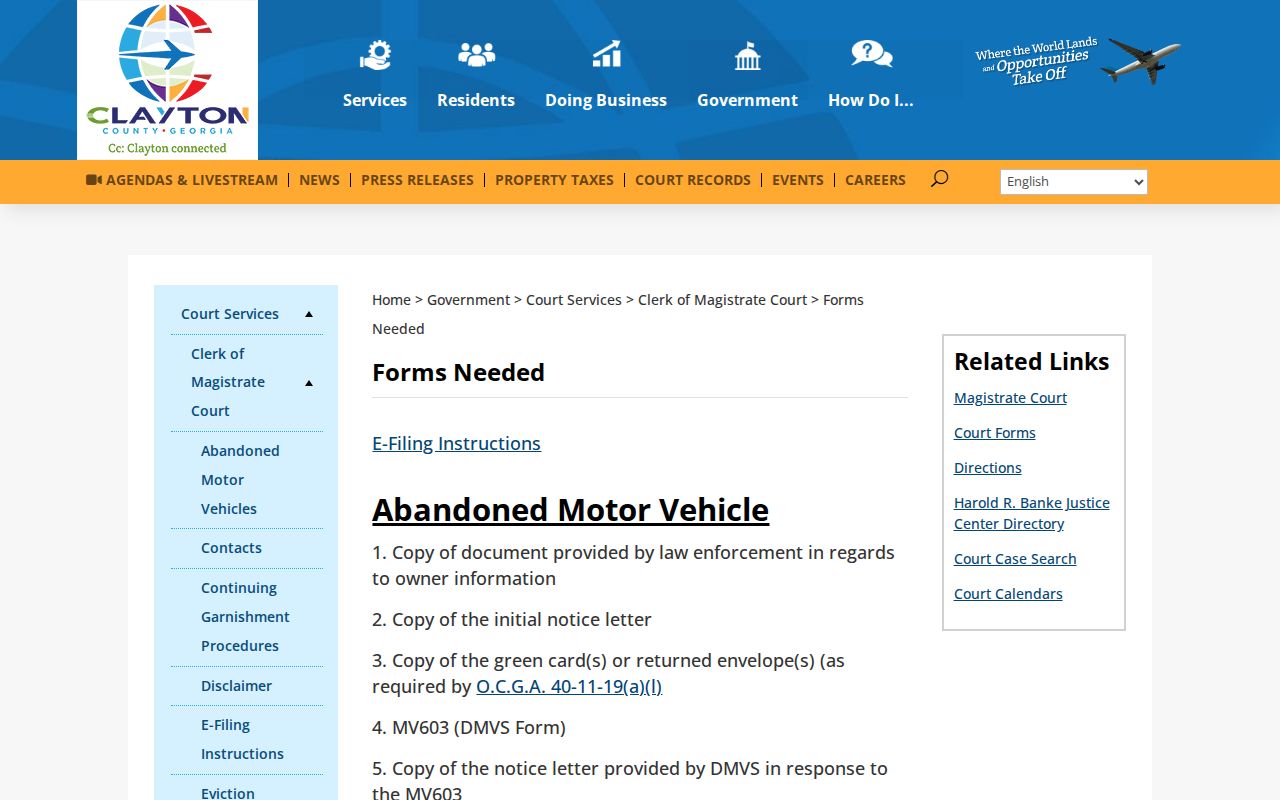
Check the current county list before filing. A copied form may be obsolete. Child-abandonment applications also carry a special child-support prerequisite, so they are not the general citizen-warrant process in Clayton County.
Clayton Citizen Application Steps
A citizen applicant starts with a police report. The official instructions then require in-person filing, valid picture ID, and a separate application for each proposed subject. The published fee is $20 per person unless a listed exception applies. The county's application screen presents these Clayton County filing rules at their official source.
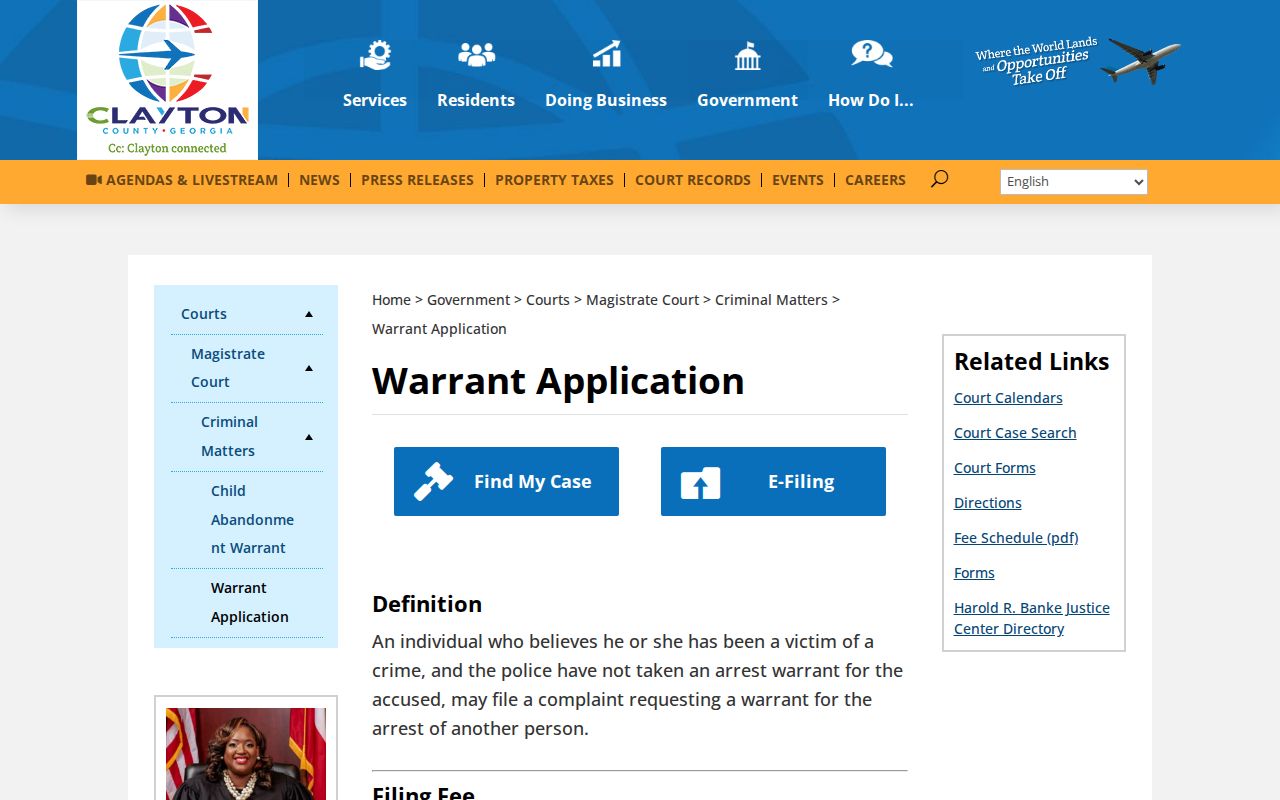
The county's own application screen confirms the order of steps: a police report and court review come before any Clayton County warrant decision.
- Keep the police report number.
- Bring photo ID and facts for the sworn form.
- File one application per person and pay the applicable fee.
- Attend the hearing after notice, no sooner than two weeks.
The applicant cannot meet privately with the judge. Staff cannot give legal advice either. In Clayton County, an application becomes a warrant only if the court finds probable cause.
Serving Arrest Warrants in Clayton County
In Clayton County, the Sheriff and other authorized officers serve arrest warrants. There is no separate public warrant-unit line. The official sheriff contact is the right place to call. Service happens when officers find the named person or during another lawful encounter. Booking may follow. At first appearance the person hears the charge and learns the rights to counsel and to stay silent. Bond can get someone released, yet it does not dismiss the case. The issuing court still sets the next date and controls the charge. The public jail schema can show charge and bond labels, including cases with no amount set or a person held as not eligible for release. Those labels shift, and they leave out fees. Check the current amount and the approved bond method with the sheriff or the Magistrate clerk. A property bond, a cash bond, a court recall, and a dismissal all mean different things. Release settles custody only. A recall changes the warrant, and the criminal case moves on until the Clayton County court resolves it.
Clayton County Arrest Warrant Docket Limits
The Sheriff Jail Docket Inquiry for Clayton County lists current inmates and recent docket-book entries. It answers one question: who is in custody now. Someone with an unserved warrant may not show up there. The sheriff also cautions that electronic data changes fast. For a releasable record that is not online, turn to the originating clerk, the sheriff contact, or the Open Records portal. Sealed, juvenile, and active-investigation material stays restricted.
Key limit: No active-inmate result does not prove there is no Clayton County arrest warrant.
Comparing Arrest, Summons, and Bench Warrants
Clayton County courts work with three different papers. An arrest warrant rests on probable cause about an alleged crime and orders custody, while a summons or citation asks for a response without arrest first. A bench warrant usually follows a missed date or a disobeyed court order. Each paper demands a different response.
| Feature | Arrest Warrant | Summons | Bench Warrant |
|---|---|---|---|
| What It Orders | Custody | Appearance or response | Custody and return to court |
| Basis | Probable cause | Notice of a charge | Failure to appear or comply |
| Who Issues It | Judge or magistrate | Court or authorized officer | The responsible judge |
| How to Respond | Counsel, surrender, bond | Appear by the stated date | Seek recall or appear |
Check Clayton Arrest Warrant Status
Georgia runs no single statewide warrant portal. The state guidance sends searchers to the local sheriff. It also warns that asking in person can bring immediate detention. Before any Clayton County warrant check, gather the full name, date of birth, case or report number, and likely court; the county's case-inquiry entry point then opens a separate route into public court records.
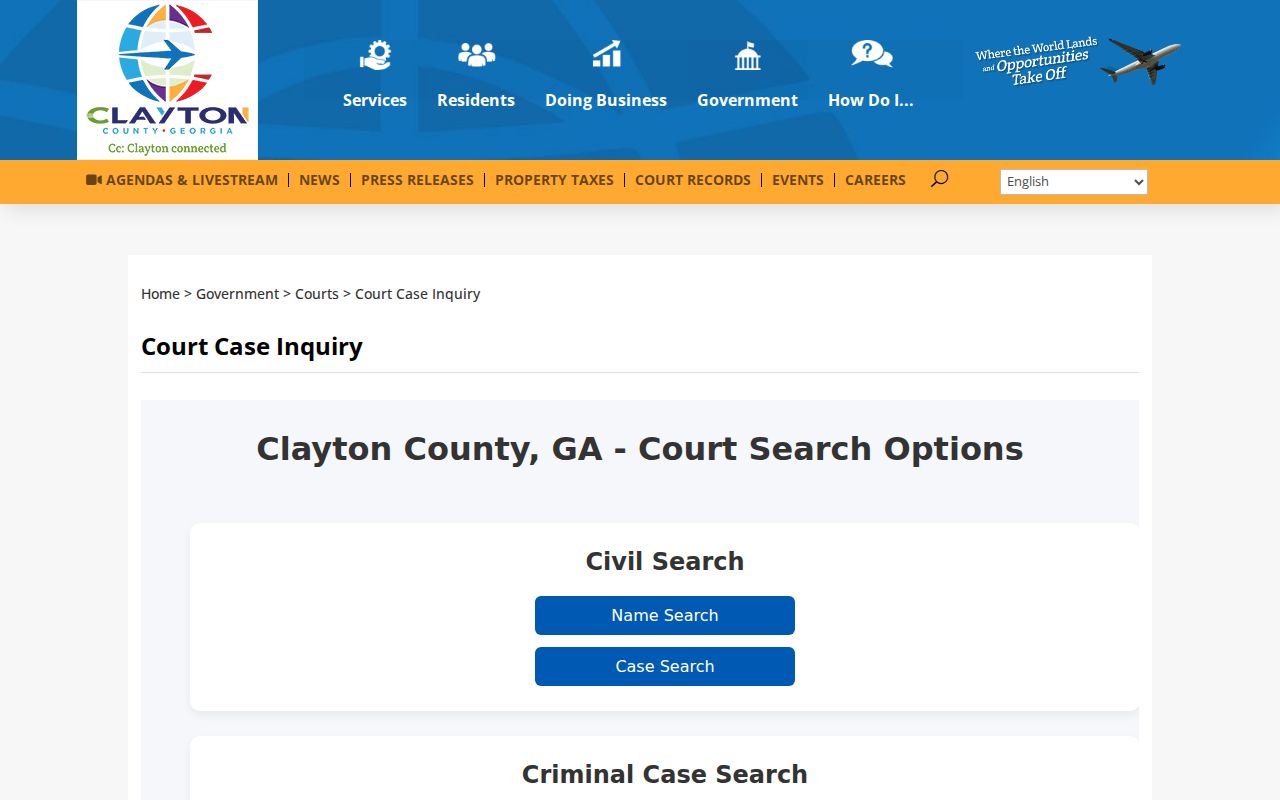
That inquiry is a starting point for Clayton County court records, not a complete warrant list.
- Use the jail docket only for current custody.
- Search the county case inquiry for a related public case.
- Call Magistrate, Superior, or State Court based on the charge.
- Ask the sheriff or records office when no releasable record appears online.
- Speak with counsel before an in-person visit about your own warrant.
Ask the court about status, bond, and next appearance. In Clayton County, those facts matter more than any portal match alone.
If There's an Arrest Warrant for You
Confirm any Clayton County arrest warrant through the issuing court or counsel. Ask where voluntary surrender is accepted. Ask about bond and which court holds first appearance. A lawyer can check the file and coordinate contact before travel. Keep every receipt and court paper. Posting bond permits release in some cases but does not end the charge, and only a court can recall or quash the warrant. Clayton County has warned residents about callers who claim a missed civic duty and demand instant payment. Never pay an unsolicited caller. Confirm a real warrant through a published court or sheriff number. Use a number you looked up yourself. Ask for the case identifier. Verify it on your own. If surrender is planned, learn which entrance to use, what identification to bring, and whether counsel can be present. After the appearance, keep written proof of the new status from the Clayton County court.
Important: Counsel can verify the order, discuss bond, and arrange a controlled surrender before an unexpected Clayton County arrest.